


Beyond Fight Night: Bernard Neequaye and the Journalism Preserving Boxing’s Untold Lives
Story by: Sammy Ofosuhene
For much of its history, boxing has been remembered through moments—knockouts, titles, and rivalries that define eras. What often goes undocumented are the quieter years that follow, when former fighters transition from public acclaim to private survival. In Ghana, that missing chapter has increasingly been filled by the work of journalist Bernard Djanie Neequaye, whose reporting has reframed boxing journalism as a record of lives shaped by the sport, not just victories earned within it.
Rather than treating boxing as a sequence of events, Neequaye’s work approaches it as a full occupational journey. His reporting examines how fighters enter the sport, how they are managed and protected during their careers, and how they cope with life after competition. This perspective challenges the traditional boundaries of sports coverage, positioning boxing not merely as entertainment but as a lived experience with lasting physical, financial, and social consequences.
Through sustained coverage, Neequaye has brought attention to realities long considered peripheral to boxing discourse. His articles document the absence of structured retirement planning, inconsistent medical follow-up, and the personal toll of careers built on physical sacrifice. By foregrounding these issues, the reporting shifts the narrative from celebration alone to reflection, asking what the sport leaves behind once the spotlight moves on.
Working for over a decade with Ghana’s state-owned Graphic Sports and Graphic Online, Neequaye ensured that these stories reached a national audience. His journalism spoke not only to boxing enthusiasts but also to readers concerned with athlete welfare, sports administration, and social responsibility. In doing so, boxing coverage expanded beyond niche interest into a broader public conversation about dignity and sustainability in sport.
A landmark moment in this body of work was the publication of “Forgotten Champions: The Harsh Reality of Ghanaian Boxers After Retirement.” The article captured the voices of retired fighters living with untreated injuries, financial insecurity, and limited institutional support. Their accounts challenged the assumption that sporting success guarantees long-term stability and reframed retirement as a defining, rather than incidental, stage of a boxer’s life.
The resonance of the piece extended beyond readership. Public discussion intensified around the responsibilities of boxing’s governing institutions, and in response, the Ghana Boxing Authority (GBA) established a Welfare Fund to assist retired fighters. While modest, the initiative illustrated how sustained storytelling can prompt institutional acknowledgment of long-ignored realities.
Neequaye’s reporting has also placed Ghanaian boxing within a global context. By referencing regulatory frameworks such as the United States’ Muhammad Ali Boxing Reform Act, he has shown that the challenges facing Ghanaian fighters are part of wider international debates about transparency, governance, and athlete protection. These comparisons situate local experiences within a global sport struggling with similar questions.
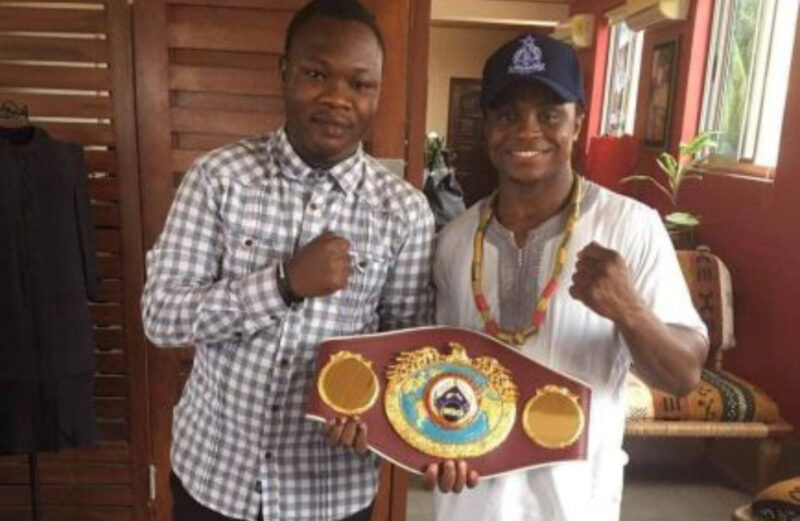
Beyond boxing, Neequaye’s assignments as a media officer for his company (Graphic Communications Group Ltd) at major international competitions—including the 2021 Africa Cup of Nations in Cameroon and the 2022 Birmingham Commonwealth Games—broadened his contribution to sports storytelling. Through these platforms, he helped bring global sporting narratives closer to Ghanaian audiences, reinforcing the importance of representation and context in international sports coverage.
His work has been formally recognized by the Ghana Boxing Authority (GBA), which honored him with the 2021-2022 Boxing Writer of the Year award. While such recognition reflects institutional engagement, the issues documented in his reporting—particularly around long-term welfare and enforcement—remain unresolved, highlighting the gap between awareness and lasting change.
Ultimately, Bernard Djanie Neequaye’s journalism serves as a corrective to boxing’s selective memory. By documenting lives beyond the bell, his work preserves stories that might otherwise fade from record and challenges the sport to confront the full measure of its impact.
As boxing continues to celebrate courage and resilience inside the ring, Neequaye’s reporting ensures that the human cost and consequences of those moments are neither ignored nor forgotten. In doing so, he has expanded boxing journalism from chronicling events to safeguarding legacy.